How does UV light technology improve the performance and costs of adiabatic cooling systems?
With the rapid growth of hyper-scale data centers, cryptocurrency mining operations, and other high-data applications, thermal management has become a critical operational concern. Adiabatic cooling systems, which leverage the evaporation of water to reduce air temperature, are increasingly employed due to their energy efficiency and effectiveness in maintaining optimal equipment temperatures. However, these systems face challenges related to water quality, particularly the control of biomass on cooling mats and the mitigation of problematic microorganisms such as Legionella pneumophila. Ultraviolet (UV) light water treatment systems have emerged as a pivotal technology in addressing these concerns, offering improvements in both operational efficiency and performance.
Understanding Adiabatic Cooling Systems
Adiabatic cooling systems work by passing air through wetted cooling pads or mats, causing evaporation that cools the air before it is introduced into data halls or mining rigs. While this process is energy efficient, the continuous presence of water creates an environment conducive to the growth of algae, bacteria, and other forms of biomass. If left unchecked, biomass buildup can reduce cooling efficiency, increase maintenance costs, and pose health risks.
The Challenge of Biomass and Legionella Control
Biomass accumulation on cooling mats can clog water distribution systems, reduce evaporation rates, and harbor microorganisms. The biomass can proliferate in warm, stagnant water and, if aerosolized, poses a risk of Legionnaires’ disease—a form of pneumonia.
Traditional chemical treatments, such as chlorine or biocides, can mitigate microbial growth but often present drawbacks, including corrosiveness, environmental concerns, and the potential for resistant strains of microbes. These limitations have led many data-driven industries to explore alternative, non-chemical methods for water treatment.
Benefits of Using UV
UV water treatment systems utilize UV-C light (typically at a wavelength of 254 nm) to inactivate microorganisms by disrupting their DNA, preventing replication and microbial growth. When integrated into adiabatic cooling systems, UV offers several key benefits:
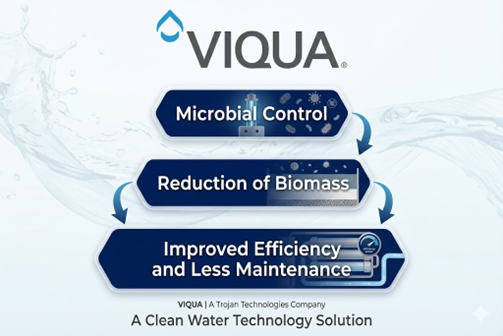
- Effective Microbial Control: UV neutralizes a broad spectrum of microorganisms, including Legionella pneumophila, without introducing chemicals into the water system.
- Reduction of Biomass Growth: By continuously treating water, UV systems can slow the formation of biofilms and algae on cooling mats, maintaining higher evaporation efficiency.
- Improved System Efficiency: Clean cooling mats allow for optimal airflow and heat exchange, reducing energy consumption and operational costs.
- Lower System Maintenance Requirements: Minimizing biomass buildup decreases the frequency of manual cleaning and system downtime.
Efficiency Gains from UV
In high-density environments like data centers and crypto mines, even marginal improvements in thermal management can translate to substantial cost savings and increased hardware reliability. While the specific efficiency gains from UV can vary based on system design and operational parameters, preventing fouling of cooling mats and heat exchangers is critical to optimal performance. Savings arise from more consistent airflow, reduced pump loads, and fewer maintenance interruptions. Additionally, the risk of costly system shutdowns due to Legionella outbreaks may be reduced, further improving overall operational efficiency.
Solutions for Your Application
VIQUA has long been involved in the application of UV into adiabatic systems with thousands of units deployed annually with many global OEMs. If you want to learn more about our products and how they might benefit your equipment, fill out the form on the page. To research other Trojan Technologies brands and how they might better support your data operation please click the links below: